
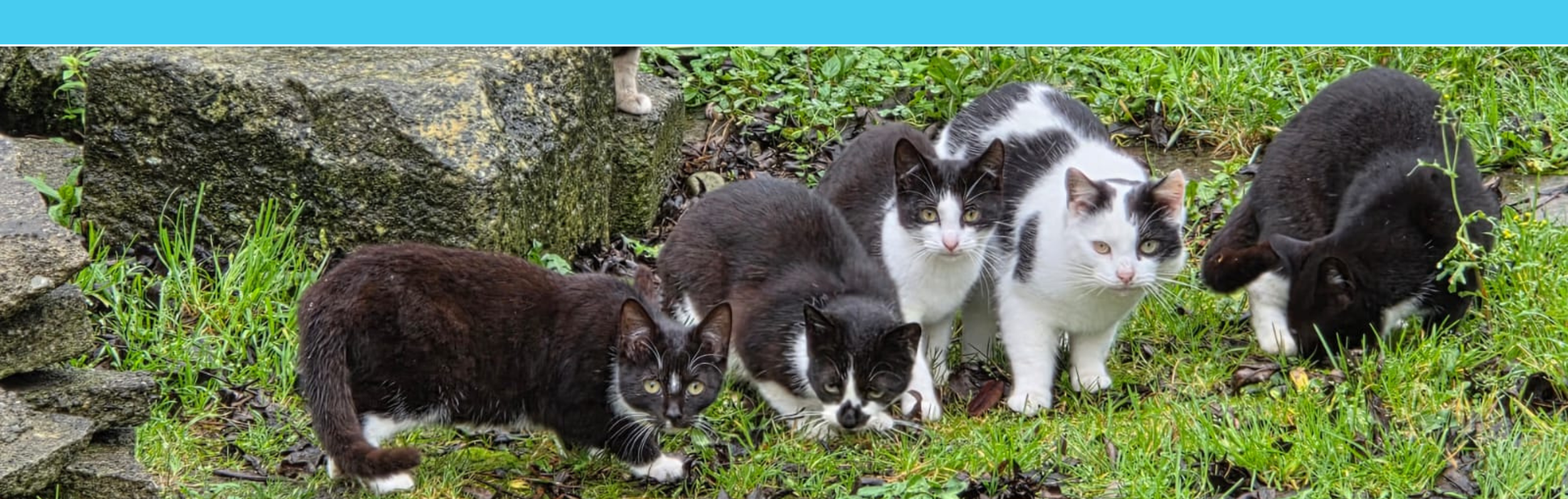
Do you have feral cats nearby?
We work with local communities to humanely manage community cat populations and can provide traps, advice, and hands-on support where possible.
Trap-Neuter-Return (TNR)
Our Trap-Neuter-Return (TNR) programme is essential to managing the overpopulation of street cats in Ireland. We work with local communities to humanely trap, neuter, and return community cats to their colonies.
We can also provide clear advice and guidance, and, where possible, help with trapping community cats and kittens.
What To Do When An Unidentified Cat Shows Up At Your Home or Work
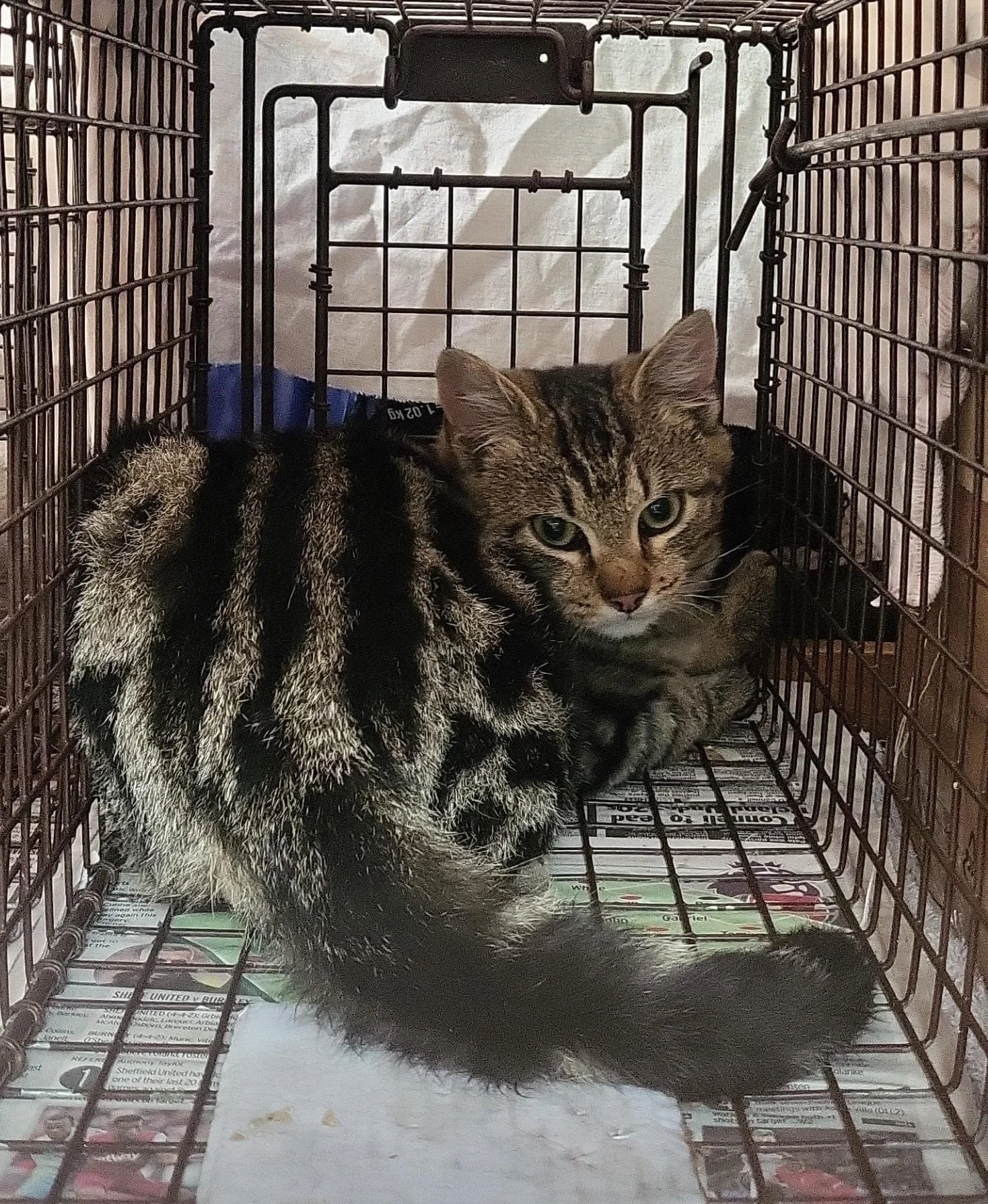
There is an estimated 250,000 or more, stray cats without a home throughtout Ireland.
Many times pet cats can get lost or abandoned for whatever reason, or a cat born outside with no human contact (feral) may come across your neighbourhood or home.
For any stray cat, providing food, water, and contacting your local rescues or animal shelter for guidance, can be a resource for help.
Stray Cats? Feral Cats? Community Cats?
-
This cat would be accustomed to living with humans and could be fending for itself after being missing or abandoned. The cat might appear to be shy at first but will quickly be trusting of humans.
-
These cats are not accustomed to human presence. They often prefer to avoid contact and choose to remain hidden. If you manage to approach one, you might see the top of one ear where the point is surgically removed (an ear-tip) . The top part of the ear could appear flat indicating that it has been captured, spayed or neutered and returned to its location.
Most feral cats are not able to rehomed, but there are other ways to provide assistance. Most animal charities implement a program called "Trap-Neuter-Return" (TNR), where these cats can get trapped, neutered and returned back to their location/colony with an "Ear-tip" on its left ear.
Remember these cats are unaccustomed to humans and will stay clear of any interaction.
Providing food and water in a secure location the same time everyday and providing some shelter if possible will benefit the cat.
Establishing a daily feeding schedule the cat will soon learn what time to arrive for their meal and this will make trapping the cat easier knowing when to predict the cat will turn up.
After TNR, it's important to look out for any new cats without an ear-tip that would also need to be neutered. This will prevent any unwanted kittens from being born into the local community.
With time and love-from-afar, these cats could soon be considered Community Cats.
-
Community Cats - or “Colony Cats” - are typically cats who live outdoors in groups, and are looked after by people in your community.
These groups of cats can be found in quieter areas of industrial estates, local parks, or near where food (or scraps) can frequently be found.
They are often a mix of feral, semi-feral, and stray cats, each with their own temperament, likes, behaviour, and tolerance of humans.
It is vital that Community Cat numbers are kept under control through Trap-Neuter-Return programs, as a mother cat can have 2-6 litters a year - producing as many as 30 kittens, many of whom could have their own children after only a few months!
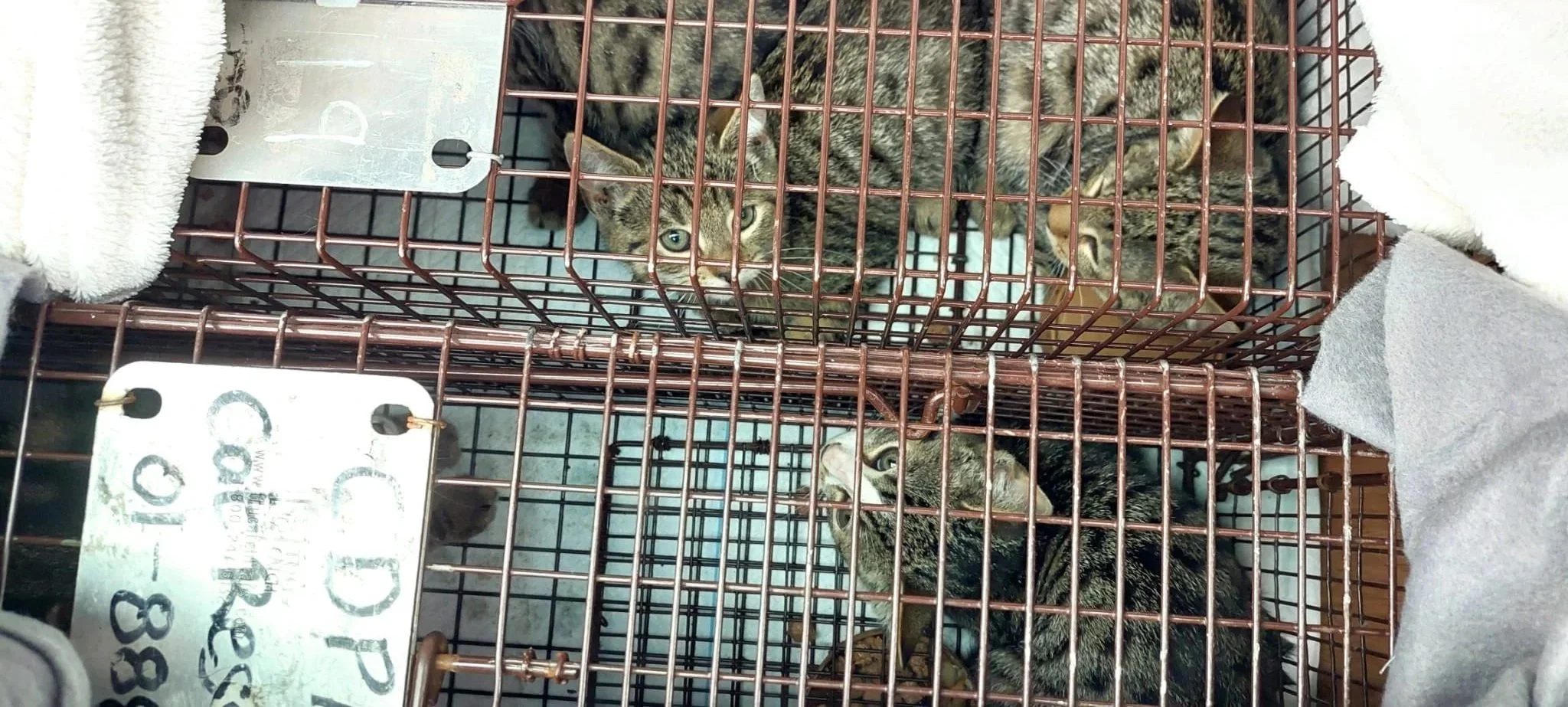
What To Do When An Unidentified Cat Shows Up At Your Home Or Workplace
-
Many, but not all, pet cats have a collar around their neck.
This may have a tag with their name, an owner’s phone number, or an address on it.
More modern collars may have tracking beacons - harmless to the animal - that let the owners keep an eye on their movements.
-
Many cats in Ireland are both pets and outdoor explorers - they could just be passing through.
Keep an eye from afar and see if the cat seems in good health - walking normally, no visible injuries or difficult in seeing.
Cats often come and go as they please - but if you see the same cat several days in a row, or the cat doesn’t seem to move, they might be in trouble!
If a cat sees you and displays any of the following body language signs, these are clear indications that they are scared and may be aggressive if approached.
Dilated eyes
Ears pointed back and flat
Growling or hissing
Keeping their distance
-
Place some cat food and a dish of water on the ground in a secure and quiet area.
A feral cat will stay away and wait for you to leave. You can keep your distance from the cat and look to see if the cat comes over to eat once there are no signs of humans around.
If the cat approaches the cat food in your presence, it is likely to be friendly - but ask any cat owner, just because they are friendly, doesn’t mean they’ll accept you picking them up!
-
Taking a friendly cat to the local vet to get checked for a microchip could reunite the cat and owner via it's microchip.
If you do not own a cat carrier, ask friends/ family or vet clinics or your local animal charity to borrow a cat carrier to bring the cat to the vet securely.
If the cat is uncomfortable being handled or is difficult to place in a carrier, consider reaching out to a local rescue organization for support or a local vet clinic.
-
Take a photo of the cat and consider posting this photo online using social media platforms such as Facebook, or Instagram.
Sharing the photos with your local vet clinics in the area and local animal charities means they may be able to share the images with the public too and hopefully someone recognises their cat.